Tag: Retention

  • When School Communications Work — and When They Don’t (Yet!)

    When School Communications Work — and When They Don’t (Yet!)

    2–3 minutes

    Not all communication channels are equally effective, but every channel contributes to how families perceive your school’s brand. In marketing communications, the goal is to keep everything aligned under one voice, even if some channels are still a work in progress. In my experience working with a multi-campus school organization, I’ve seen firsthand which types of communication deliver strong results and which require more patience.

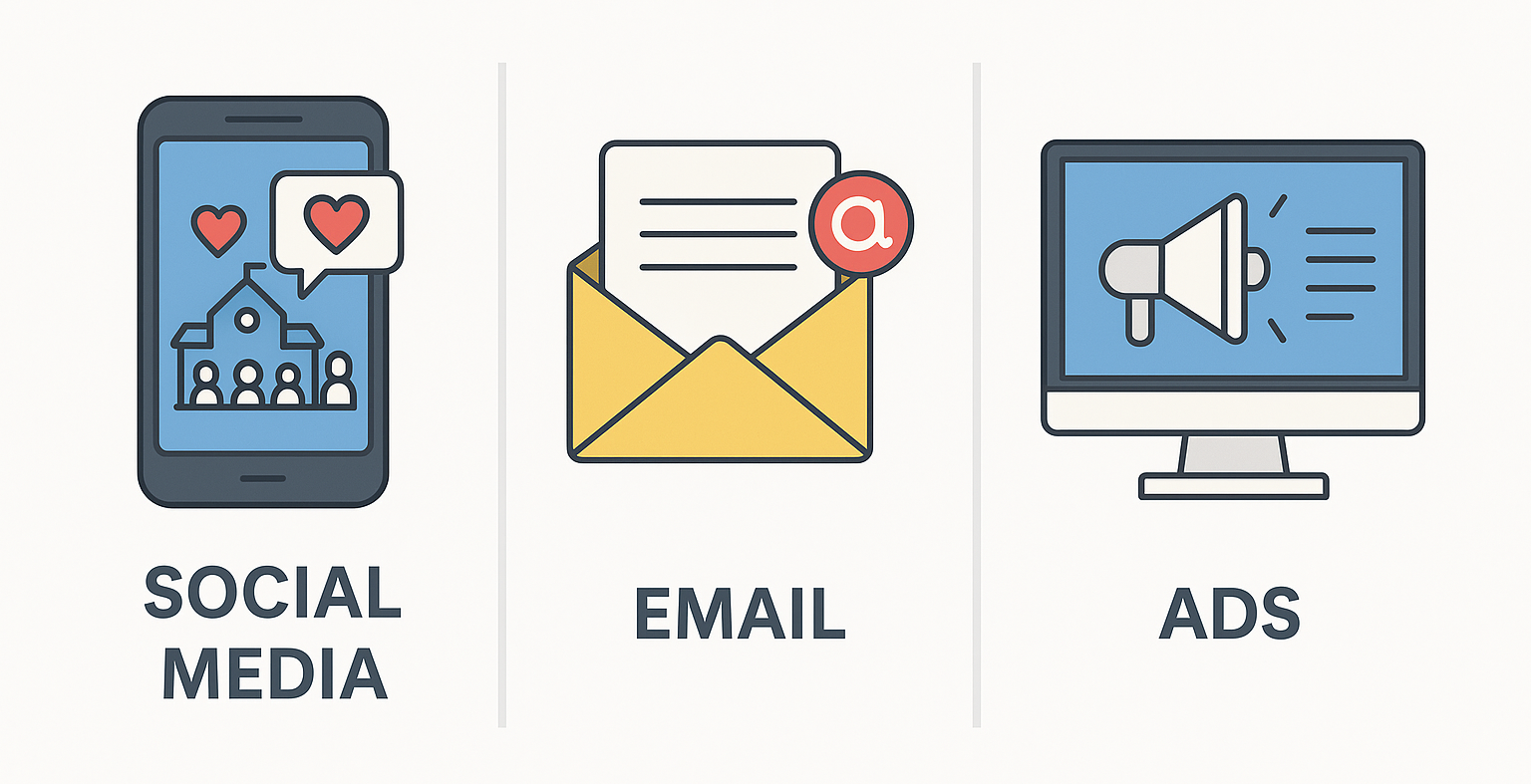
    Social Media: A Consistent Win

    Social media has been our most effective communication tool. One reason it performs so well is its ability to bring a large audience together — parents, students, extended families, and the broader school community. It delivers our message on a larger scale while still feeling more relaxed and approachable than official school channels like emails or newsletters. With multiple campuses, we needed a clear strategy and training to ensure one brand voice across accounts. Now, even our newest campuses see steady growth and engagement. Posting five times a week with a mix of classroom stories, events, and campaigns has made social media our strongest communication platform.

    Email: A Work in Progress

    Email marketing is a tougher channel, but it has unique advantages that keep us committed. We began investing in email because, unlike social media where content is scrolled past quickly, email has the potential to be personal, targeted, and measurable. We’ve tested event invitations, drip campaigns for prospective parents, and “Did you know?” stories for current families. Engagement may be lower than other channels, but consistency matters. Over time, regular inbox presence helps build familiarity, trust, and recognition.

    Ads: Building Brand Presence

    Because of our organization’s size, we’ve been able to run Meta and banner ads year-round, updating them every few months to reflect admissions trends and campus events. Most schools won’t operate on this scale, and that’s okay. If you’re just starting out, I recommend beginning with Meta ads — they’re cost-effective and allow precise targeting to prospective families. As your strategy matures, adding banner ads through platforms like AdRoll or Google creates more touchpoints and keeps your school name top-of-mind. Ads, when done consistently, help reinforce your positioning and extend your reach beyond your immediate community.

    Final Thoughts

    The truth is, communication channels don’t all deliver results at the same pace. Social media creates community quickly, ads build brand presence steadily, and email works more quietly in the background to nurture trust. What matters most is showing up consistently across channels so families experience your brand in one clear and reliable voice.

    What’s your story? 💡 Which of your school’s communication channels are working well, and which ones simply need more patience and consistency to pay off?


  • How Brand Personality Builds Trust (or Breaks It)

    How Brand Personality Builds Trust (or Breaks It)

    1–2 minutes

    Every school has a personality. Parents notice it in the way your school communicates, the words you choose in your materials, and even the feeling they get when walking into your campus. But just like with people, a personality that feels out of touch or dishonest will push families away.

    What Story Is Your School Telling?

    If your school positions itself as “warm and family-centered,” parents expect to see that promise lived out in every detail: friendly staff greetings, consistent communication, and community-focused events. If your personality is “innovative and future-ready,” families will look for evidence in your curriculum, technology use, and student projects.

    Ask yourself: When families look around, from your website to your hallways, does the story you tell match the experience they actually see? If not, that gap can quickly weaken trust.

    …problems arise when a school says one thing and shows another.

    Examples of School Personalities

    A Montessori school may emphasize traits like “independent, curious, and student-led.” A traditional school might lean into “structured, disciplined, and academically rigorous.” Neither approach is wrong, but problems arise when a school says one thing and shows another. Branding elements, from website tone to social media posts, are most effective when they consistently reinforce the personality families experience in real life.

    Why This Matters for Trust

    Parents choose schools not only for academics but also for the environment they are sending their child into each day. A school that claims to be welcoming, innovative, or community-driven must demonstrate those qualities in visible, consistent ways. A school’s brand personality is only powerful when it feels true to the families you serve and true to the experience you provide.

    ★ So here’s the deeper question: If your school’s personality walked into the room today, would families immediately recognize it as the same one they encounter in your classrooms, your communications, and your community?

  • Leading with Data: How Research Makes You a Better School Marketing Leader

    Leading with Data: How Research Makes You a Better School Marketing Leader

    2–3 minutes

    Being a marketing leader in schools means more than just managing campaigns or posting on social media. It means being a strategic partner, a trusted advisor, and a credible voice at the table when important decisions are made. So how do you achieve and maintain that credibility? By letting research and data guide your marketing decisions.

    “Good marketing leaders don’t just rely on intuition; they use data to create stronger strategies.”

    Why Data Matters for School Marketing Leaders

    In school marketing, intuition and creativity certainly have their place. But as a leader, your ideas carry much more weight when they’re supported by clear, reliable data. Good research gives you credibility, helps your school make better decisions, and ultimately positions you as someone who drives results rather than just suggests ideas.

    Here’s how data helps you stay ahead:

    1. Data Supports Strategic Planning

    Good marketing leaders don’t just rely on intuition; they use data to create stronger strategies. By regularly reviewing enrollment trends, retention rates, and competitor data, school marketers can identify what’s working, what’s not, and where opportunities lie.

    For example, tracking advertising metrics such as ad clicks, social media engagement, and website traffic helps determine exactly where to invest resources. Are social ads outperforming Google ads? Is email marketing generating meaningful engagement? Using this data to guide your decisions ensures your strategy is thoughtful, targeted, and effective.

    2. Data Demonstrates Your Marketing Impact

    School leadership and boards often wonder, “Is our marketing budget actually working?” Good marketing leaders use data to answer this question clearly. When you can show how marketing efforts directly contribute to key goals like increased inquiries, higher attendance at admissions events, or improved parent satisfaction, you reinforce your value and protect your team’s budget.

    Consider a scenario where your ad metrics show clear increases in website traffic that correlate with an uptick in admissions inquiries. This direct connection between data and outcomes not only justifies current spending but positions you to request additional resources confidently.

    3. Data Builds Trust and Credibility

    When your recommendations are consistently backed by solid research data, your team and school leadership trust you more. Decisions supported by numbers feel less risky than those based solely on intuition. Over time, this trust grows, giving you greater influence in decision-making processes.

    For example, presenting data that clearly shows improved open-house attendance when marketing emails are sent on specific days or at specific times gives your recommendations credibility and makes you a trusted partner in strategic planning conversations.

    Putting it into Practice

    If you’re just beginning to use data in your school marketing role, start small. Regularly review and present simple metrics that matter most, such as:

    • Enrollment and retention numbers
    • Website and landing page analytics
    • Social media and email engagement metrics
    • Advertising effectiveness

    Use this data not just for reporting—but to inform future strategies, justify your budget requests, and demonstrate your value as a leader.

    The difference between good marketers and great marketing leaders in schools often comes down to one thing: their ability to use data strategically. By consistently incorporating research data into your decision-making, you’ll not only become a more effective marketer—you’ll firmly establish yourself as a trusted marketing leader.

    , , ,
  • Not All Surveys Are Created Equal: Getting Better Data in School Marketing

    Not All Surveys Are Created Equal: Getting Better Data in School Marketing

    2–3 minutes

    You send out a survey to parents after an open house. A few responses trickle in. The data feels… underwhelming. You shrug and think, “Well, at least we asked something.”

    But did we actually learn anything useful?

    In school marketing, surveys are everywhere—event follow-ups, family satisfaction check-ins, even branding research. But here’s the truth: not all surveys are created equal. A poorly designed survey doesn’t just waste time—it can point your strategy in the wrong direction.

    Good Survey vs. Bad Survey (And Why It Matters)

    A good survey asks the right questions, in the right way, to the right people. It gives you clear, reliable, and actionable insights. A bad survey? It might confuse respondents, encourage bias, or collect data you’ll never actually use.

    Here’s an example:

    Bad: “Don’t you agree that our school offers excellent academic support and extracurriculars?”

    Good: “How satisfied are you with our school’s academic support?” followed by “How satisfied are you with our extracurricular offerings?”

    The first question is leading and double-barreled—you won’t clearly understand what the respondent agrees or disagrees with.

    Another common mistake? Asking questions that parents can’t reliably answer, like “How many minutes did you spend reading the last newsletter?” Instead, ask something more approachable like, “How often do you read our school newsletter?” with a multiple-choice range.

    A well-designed survey doesn’t just ask—it listens, learns, and leads.

    Why Should School Marketers Care?

    We rely on surveys to gather feedback from parents, students, staff, and alumni—but a flawed survey can result in misleading data, frustrated respondents, or even a loss of trust.

    Imagine relying on skewed survey results for critical decisions about messaging, events, or program offerings. That’s a risk most schools can’t afford.

    And here’s the kicker: bad surveys don’t just result in bad data—they can actually reduce future participation. Once families feel a survey is confusing, irrelevant, or overly long, they’re less likely to engage next time.

    More Isn’t Always Better

    It’s tempting to believe that something is better than nothing—but when it comes to research, that’s not always true.

    Bad data can create the illusion of insight. It can lead your team down the wrong path, make your marketing feel tone-deaf, or fuel decisions that don’t reflect your families’ real needs.

    A thoughtful survey with fewer, more targeted questions will always outperform a longer one filled with vague or unfocused items.

    Best Practices for School Surveys

    If you’re building a survey for your school community, here are a few tips to keep it effective and insightful:

    • Start with your end goal in mind. What decisions will this survey help you make?
    • Avoid double-barreled or leading questions. One idea per question, no assumptions.
    • Use familiar language. Write in the tone your audience uses every day.
    • Keep it short and strategic. Only ask what you truly need to know—and are prepared to act on.
    • Test it first. A quick pilot with a few colleagues can catch confusing wording or layout issues.

    Good surveys help you listen better. They give families a voice, uncover hidden insights, and empower your team to make informed decisions that align with your school’s goals.

    Before launching your next school survey, ask yourself: Are we gathering real insights, or are we just collecting data for data’s sake?

    , , , ,
  • The Value of Marketing Research in School Marketing

    The Value of Marketing Research in School Marketing

    2–3 minutes

    In school marketing, the most important data point is always enrollment numbers. At the end of the day, every marketing effort—from social media campaigns to email outreach—ultimately supports the goal of attracting and retaining students. But here’s the challenge: marketing data rarely gives a direct answer. Is that Facebook ad responsible for increased enrollment? Did that open house actually lead to new applications, or was it just good word of mouth?

    It’s easy to go with your gut in marketing, especially when working with complex or indirect data. But over time, data tells a story—and that story shapes better decision-making.

    …over time, data tells a story—and that story shapes better decision-making.

    Why Schools Need Marketing Research

    Many schools focus on surface-level marketing metrics like ad clicks, impressions, social media engagement, and email open rates, but without research, these numbers lack context. Marketing research helps schools:

    • Understand Parent Behavior – What motivates a family to enroll? What are their concerns?
    • Optimize Marketing Strategies – Which channels drive the most engagement? Are certain messages resonating more?
    • Improve Event & Campaign Impact – Are open house attendees actually applying? Which outreach methods are most effective?
    • Support Stakeholder Decisions – Data helps schools demonstrate marketing’s value to leadership and justify budget allocation.

    Beyond the Gut Feeling: Why Tracking Marketing Efforts Matters

    For a long time, my team wasn’t prioritizing data. We created great campaigns, engaged with families, and made informed decisions—but we didn’t have a system in place to truly track and analyze marketing effectiveness. This year, we committed to integrating data into our decision-making process. Now, we track key performance indicators (KPIs) across digital marketing, admissions events, and long-term trends to see what’s working (and what’s not).

    The biggest lesson? Figuring out which data speaks for your team is vital. For day-to-day and month-to-month planning, marketing data helps us tweak strategies. But at the end-of-year stakeholder meeting, data speaks volumes—translating marketing efforts into concrete results.

    Marketing research isn’t about finding one magic number that answers everything. It’s about identifying patterns, testing strategies, and making informed decisions to drive enrollment and engagement. Schools that take the time to track, analyze, and adapt their marketing efforts based on data will always be better positioned for success.

    So, what data points matter most for your school? And more importantly—what story is your data telling?

    , ,
  • Winning Parent Trust in School Marketing

    Winning Parent Trust in School Marketing

    2–4 minutes

    For families choosing a school, trust plays a huge role. Parents want more than academics—they need to feel confident that their child will be supported and safe in an environment that reflects their values. Schools that build strong relationships with families don’t just increase enrollment; they create lasting connections that lead to engaged communities and positive word-of-mouth.

    How Schools Can Earn and Keep Parent Trust

    1. Clear and Honest Communication

    Trust starts with honesty. Parents want straightforward communication about school policies, safety measures, academics, and expectations. Schools that openly share updates and respond to concerns show families they have nothing to hide. Whether it’s through emails, meetings, or social media, keeping parents informed builds confidence and trust.

    1. Real Stories, Real Connection

    Families relate to real experiences, not just polished marketing. Schools can build trust by featuring real student achievements, testimonials, and behind-the-scenes moments that reflect the school’s culture. Whether through video spotlights, parent interviews, or classroom highlights, showing authentic experiences makes messaging more engaging and relatable.

    1. Consistency Builds Confidence

    Parents feel more confident in a school when its messaging is clear and consistent. Whether they see an update on social media, read a newsletter, or speak with staff, the message should align. When branding and communication are unified across platforms, it reinforces trust and helps families feel secure in their decision.

    1. Building Relationships Beyond the Classroom

    Trust grows when schools actively involve families. Hosting events, encouraging parent participation, and providing volunteer opportunities all show that the school values its community. The more parents feel like they belong, the more likely they are to trust the school and advocate for it.

    Trust in Action: The Student Spotlights Campaign

    At our school, a recent student spotlight campaign was designed to highlight students talking about their niche interests—whether in art, sports, science, or other fields. The initial goal was to showcase our academic and extracurricular programs, but what emerged was something even more powerful. The students’ responses reflected the very heart of our school’s mission: they were well-spoken, kind, eager to learn, compassionate toward others, and more. These stories were more than just promotional material; they became a testament to the school’s impact.

    These stories were so authentic and impactful that we made sure to share them across multiple platforms for our wider audience to see. Current families saw reinforcement of the values they already trusted, prospective parents gained insight into the kind of students our school nurtures, and even prospective teachers saw the school’s culture in action. The campaign became a living example of how trust is built—not just through words, but through the voices of the students themselves.

    Common Mistakes That Hurt Trust

    • Lack of Follow-Through – Overpromising without proof can quickly erode trust. If schools promote programs or opportunities, they must ensure those offerings match reality. Families need to see evidence that their expectations will be met.
    • Overlooking the Parent & Student Perspective – Messaging that doesn’t reflect real family and student experiences can feel disconnected and impersonal.
    • Inconsistent Brand Messaging – Differing messages across campuses, websites, or social media can create confusion and weaken credibility.
    • One-Way Communication – Schools that just send out updates without opening a conversation lose chances to connect and build trust with families.

    Winning and maintaining parent trust is an ongoing process. Schools that prioritize transparency, authenticity, consistent communication, and active community engagement will stand out in a competitive landscape. When trust is strong, families naturally become the school’s best advocates, sharing their experiences and strengthening its reputation.

    , ,
  • Consistent & Clear: Mass Communication for Multi-Campus Schools

    Consistent & Clear: Mass Communication for Multi-Campus Schools

    2–4 minutes

    Mass communication is an opportunity for organizations to deliver unified messaging across multiple channels to diverse audiences. In school marketing, this could mean maintaining clarity across multiple campuses while tailoring messages for local engagement. In an era where digital communication dominates, schools must adopt mass communication strategies to ensure consistent messaging across multiple platforms. For multi-campus schools, this challenge becomes even greater, as each campus has its own unique community while still being part of a larger organization. The key to effective mass communication in school marketing is ensuring messaging remains consistent and clear across all campuses while still maintaining local relevance.

    The Importance of a Unified Brand Across Campuses

    When parents and prospective families engage with a school’s brand—whether on social media, a website, or through digital ads—they expect a cohesive experience. Inconsistent messaging across campuses can create confusion, diminish trust, and weaken the organization’s credibility. Mass communication plays a crucial role in eliminating these inconsistencies by providing a structured approach to messaging that aligns all campuses under a unified brand voice.

    A strong, unified brand presence reassures families, faculty, and community members that each campus shares the same values and mission. Ensuring clarity and alignment in communication builds trust and fosters a seamless experience, making it easier for families to connect with the organization regardless of where they interact with the brand. Schools that prioritize consistent messaging not only strengthen their reputation but also increase engagement and can improve enrollment outcomes.

    Image by Camila Carruyo

    Strategies for Maintaining Consistent Messaging Across Campuses

    Maintaining consistent messaging across multiple campuses doesn’t mean every post, ad, or campaign needs to be identical. Instead, schools should establish clear guidelines while allowing some flexibility for individual campuses. Here’s how:

    1. Develop a Core Messaging Guide

    Creating a centralized messaging guide helps ensure that all campuses communicate in a way that aligns with the school’s brand identity. This guide should outline key brand messages and values, approved language and tone, design standards, and visual elements. It should also provide guidelines for adapting content for specific campuses while staying on-brand.

    1. Define Your Content Strategy

    A well-structured content plan allows schools to maintain brand consistency while tailoring messaging to each campus’s needs. One of the most effective tools for this is the use of content pillars—broad themes that guide messaging across different platforms while allowing for flexibility in local execution. These pillars help ensure that all campuses focus on key brand narratives while adapting them to their local communities. Schools can also achieve consistency by establishing a library of shared content templates for social media, newsletters, events, and more.

    1. Ensure Alignment in Paid Ads

    When running paid digital advertising for multiple campuses, it’s essential to ensure that messaging stays aligned with the overarching brand. On my team, all ads are centrally managed in the main marketing office to ensure consistency while addressing each campus’s specific needs. The marketing team ensures that all campaigns use a cohesive brand voice, visuals, and strategic positioning. We also refine our approach through A/B testing to maximize effectiveness while reinforcing our organization’s mission and values.

    By implementing these best practices, multi-campus schools can ensure that their marketing efforts feel cohesive and professional while still allowing for individual campus differentiation. A strong, unified brand presence helps schools build trust, engage families, and maintain a consistent reputation across all communication channels, ultimately leading to higher retention and enrollment growth.

    ,
  • Understanding Families: The Power of Parent Personas in Schools

    Understanding Families: The Power of Parent Personas in Schools

    3–4 minutes

    With years of experience crafting Parent Personas for schools, I have seen firsthand how this practice transforms our approach to marketing and admissions. By collaborating with our admissions teams, we’ve been able to craft detailed profiles based on current and prospective families, ensuring that our marketing efforts resonate with the right people. This approach not only benefits us on the marketing side, but also strengthens the connection between the school and their community.

    What are Parent Personas? 

    Parent Personas are detailed profiles that represent the families that your school aims to attract and serve. These personas are most efficiently and effectively created alongside the admissions team as they are based on real insights from current and prospective families. 

    These personas go beyond just descriptions—they’re tools that help you develop everything from marketing campaigns to school events. Parent Personas give you the opportunity to be intentional about the ways that you can interact with your school families which furthermore sets the stage for more meaningful connections. 

    Creating a Parent Persona

    Creating well rounded Parent Personas is key to ensuring your marketing efforts are relevant and impactful. Here’s how my team ensures our personas are as detailed and effective as possible:

    1. Define the Basics

    Name, age range, level of education, occupation, salary, and “entry”

    This section is straightforward. Come up with a name that represents your parent group, define an age range, tell us what their level of education is, what they do for work, estimate their annual salary, and tell us how they found out about your school (website, referral, etc).

    1. Identify Needs, Concerns, and Expectations

    Create a bio that encapsulates your persona. 

    Here are some questions you can ask: 

    • What grade is their child in?
    • Where do they spend their money/time?
    • What kind of school were they at before? (if applicable)
    • Why are they looking to change their school? (if applicable)
    • What do they love about your school specifically? Or about the idea of coming to your school?
    • What are their top 3 needs?
    • What are their top 3 concerns? 
    • What are the expectations they come in with?
    1. Reflect

    Now that you know a bit about your parents, this is when you need to look inward.

    Ask yourself:

    • Based on their top 3 needs, how can we help serve those needs? 
    • Based on their top 3 concerns, what are solutions we can provide?
    • Based on their expectations, where is the disconnect between what they expect and what we offer?

    Putting Your Parent Personas to Work

    So, now that you have your first Parent Personas, how can you put them to work? One example from my experience involved a Parent Persona representing families hesitant about private school tuition. By understanding their concerns, my team and I were able to develop a campaign that focused on value. We used testimonials from parents, teachers, and even current students to highlight the short- and long-term benefits of private school education. We were able to target this demographic directly and the campaign effects even trickled into our other parent categories as well. 

    As a result, we saw an increase in:

    • Tour Bookings: Families who had expressed hesitation finally took the next step.
    • Social Media Engagement: Campaign posts resonated with current and prospective families, meaning people were liking, commenting, and sharing our posts with the community.
    • Retention Rates: Our campaigns reignited trust and satisfaction among our current families, resulting in higher retention rates. 

    Parent Personas ensure that your school’s marketing efforts are purposeful and impactful. They can help guide your messaging, connect with families, and build lasting relationships. Whether you’re creating big marketing campaigns, brainstorming email topics, or coming up with ideas for school events, Parent Personas serve as a roadmap to success.

  • Turning Families into Fans: Watch Your Retention Transform 

    Turning Families into Fans: Watch Your Retention Transform 

    2–3 minutes

    Imagine this: You have a prospective family ¾ of the way down the funnel, they’ve come in for a tour, you’ve maintained steady communication, and they’ve even paid the application fee. Suddenly, they’ve dropped out of the funnel entirely, lured away by the private school down the street. Where did you go wrong? 

    Parents often enter the school decision-making process with preconceived notions about private education, ranging from financial concerns to doubts about the curriculum and programs. These parents have options and resources to make whatever choice they see fit. So, why you? As a marketer who has spent countless hours working directly with admissions teams, I know firsthand that a private school parent cannot simply be satisfied by their school; they need to be committed. This means going the extra mile to ensure that they want to stick with YOU, not just with the private school system. 

    Here are 3 ways I have found effective for transforming these attitudes and not only bring prospective parents into the funnel, but keeping them on board for the entire school journey: 

    • Be transparent: Parents want to know exactly who they’re doing business with. Use the power of social media and advertising to control the narrative of your school. For example, if your parents are interested in athletics but your school is just beginning to develop their athletic program, build a campaign around “Building Champions Together.” You’re addressing a concern while simultaneously instilling trust and a vision for the future. 
    • Create a sense of community: Parents want to feel like they already belong. Create email drip campaigns to keep prospective parents in the loop while they’re still in the funnel. Make sure they’re getting marketing emails about school and community outreach events where they can meet and interact with your current school families. And, if you think email marketing is out, check out the data and tips in this Digistorm article.
    • Show them how good it gets: Parents want to see proof of what they’ve been promised. Show your students and families thriving through alumni stories, student success stories, and parent and student testimonials. These should be placed strategically on your website and throughout your social media channels. The goal is to ensure prospective families see the thriving community your school fosters, wherever they engage with your school. 

    Transforming attitudes is about building trust, addressing concerns, and creating emotional connections that turn prospective families into lifelong advocates for your school.

    When parents believe in your vision and see it in action, they not only stay, but they also encourage others to join, creating a cycle of loyalty and growth that strengthens your school for years to come.